Loading page...
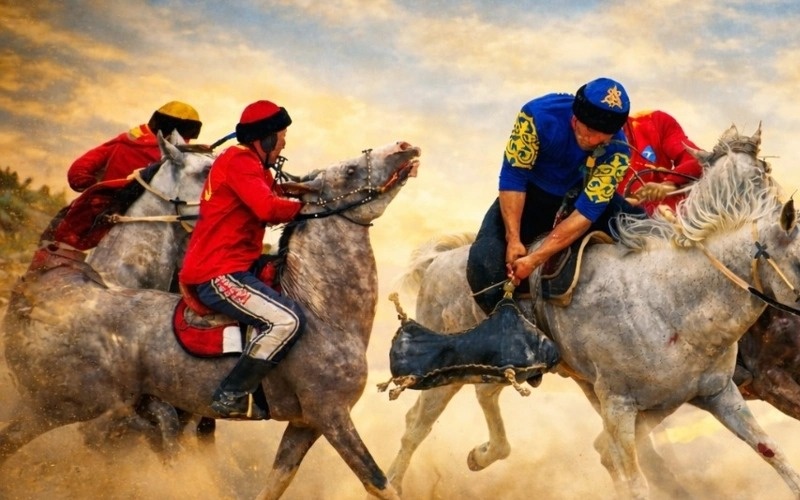
A Land of Deep Cultural Roots and Warm Hospitality
What international students should know about daily life, etiquette, and social expectations in Kazakhstan
Culture shows up in greetings, hospitality, classroom behavior, tea invitations, and the way people gather socially.
Rich and Diverse Cultural Heritage
Kazakhstan takes immense pride in its rich and diverse cultural heritage, stretching back thousands of years to ancient nomadic civilizations. This heritage combines traditional Kazakh customs with influences from Central Asia, Turkic roots, and Russian and modern global cultures, resulting in a uniquely Kazakh identity.
The Kazakh language is widely spoken and coexists with Russian as a common second language, reflecting Kazakhstan's multiculturalism. Visiting museums, art exhibitions, and historical landmarks gives insight into the country's journey from a nomadic past to modern nationhood.
For students, the most useful part is practical: how people greet each other, how to behave when offered tea or food, and what respectful communication looks like in classrooms, dormitories, and everyday conversations.
Communal Life and Traditions
These are the everyday patterns students usually notice first.
Kazakh communal life is colorful and deeply rooted in social values such as hospitality, respect for elders, and collective celebration. Traditions are preserved through storytelling, music, and festive gatherings, often featuring traditional games, crafts, and family-centered customs.
Hospitality
Hospitality is a cultural pillar in Kazakhstan. Guests are usually offered tea or food, and accepting politely is part of normal etiquette.
Guest traditionsHot tea ceremoniesHomemade treatsStorytelling
Respect for Elders
Respect for elders is deeply ingrained in Kazakh culture, and students will often notice more formal greetings around teachers and senior people.
Formal greetingsPolite languageWisdom sharingFamily bonds
Collective Celebration
Communal life is shaped by shared meals, music, and public celebrations that help students see traditions in everyday settings.
Festive gatheringsTraditional gamesFamily-centered customsCommunity bonds
Folk Arts and Cultural Identity
Kazakh folklore plays a crucial role in expressing everyday life, history, and national unity
Kazakh folklore plays a crucial role in expressing everyday life, history, and national unity. Traditional dances, songs, and epic poetry (such as the performances of akyns, the bard poets) depict the values and resilience of Kazakh life.
Dance performances often involve elegant movements by women and athletic displays by men, all performed in vibrant national dress.
Cultural festivals such as Nauryz (the Kazakh New Year) are prime opportunities to witness traditional music, dance, and communal feasting, bringing communities together in celebration of unity and renewal.
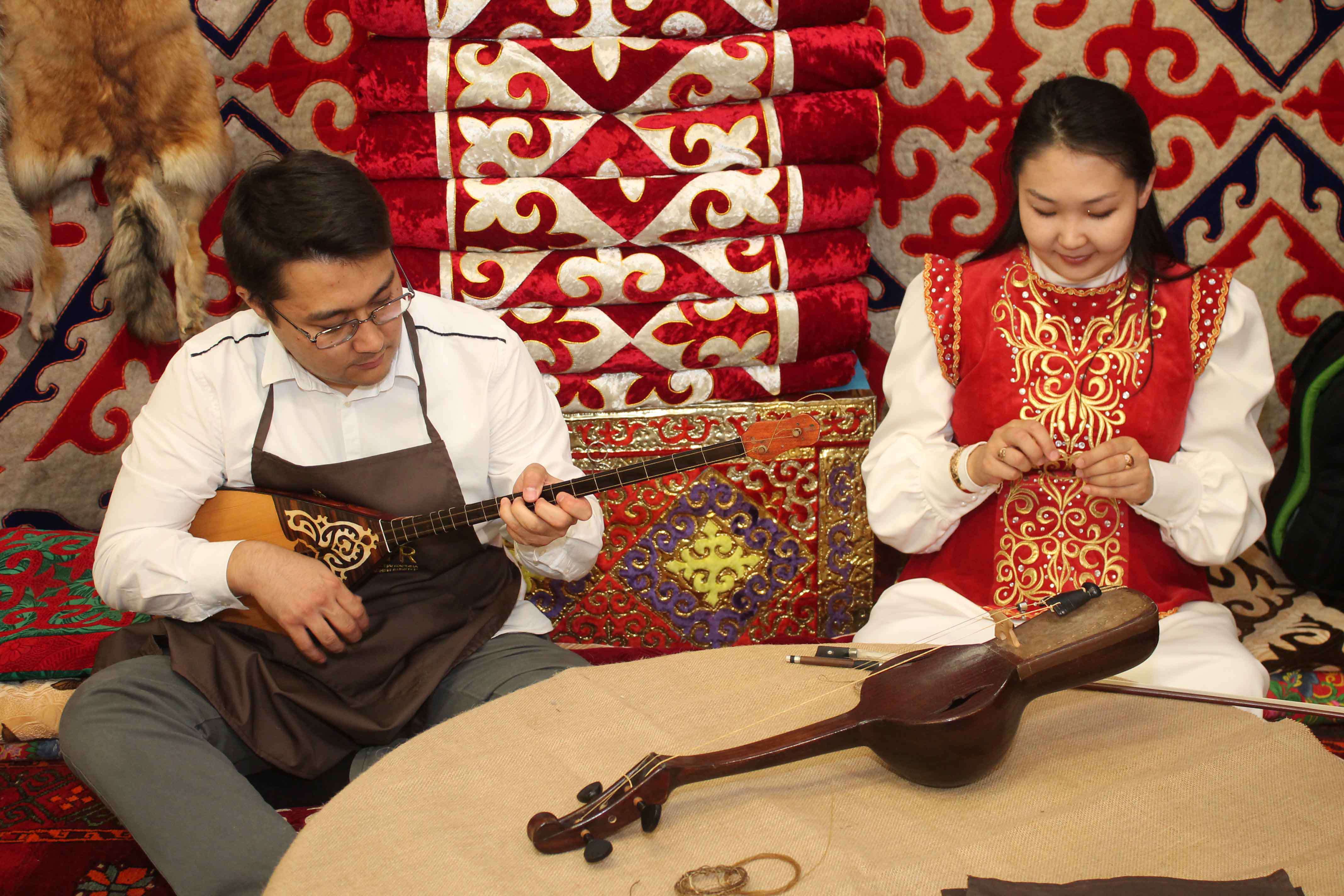
Dombra
The dombra is Kazakhstan's national instrument and appears often in school events and performances.
Kobyz
The kobyz is a traditional bowed instrument tied to older musical and storytelling traditions.
National Dress
National dress is often worn for holidays, ceremonies, and cultural events rather than daily life.
Yurt Culture
Yurt experiences are a simple introduction to nomadic heritage and hospitality.
Cuisine and Culinary Culture
Kazakh cuisine reflects the diversity of the land and people, offering a hearty and flavorful experience. Meals often feature meat (especially lamb and horse), dairy products, noodles, and fresh produce.
Local delicacies like beshbarmak, kazy, and baursak are enjoyed in traditional restaurants and tea houses, where food is not only nourishment but a celebration of hospitality and shared culture.
Traditional Dishes
- Beshbarmak - the national dish
- Kazy - horse meat sausage
- Baursak - fried dough balls
- Manti - steamed dumplings
- Shashlik - grilled meat skewers
Nature, Identity, and Ecotourism
With its vast steppes, mountain ranges, and deserts, Kazakhstan offers an ideal escape for nature lovers. Regions such as Almaty Province, Mangystau, and the Altai Mountains provide rich opportunities for ecotourism, exploration, and connection to traditional Kazakh lifestyles.
Traveling through the countryside, visitors encounter authentic village life, local crafts, yurt stays, and untouched nature, offering a meaningful contrast to fast-paced modern life.
Mountain Ranges
Vast Steppes
Deserts
Warm, Welcoming People
Kazakhs are known for being genuinely welcoming and respectful, with hospitality being a cultural pillar. Guests are honored and cared for, often welcomed with hot tea, homemade treats, and stories passed down through generations.
Kazakhstan's culture is a mix of tradition and modern student life. The safest default is to be polite, listen first, and observe how people greet and host each other.
Hot Tea
Homemade Treats
Stories
Hospitality
Cultural Experiences
These are the easiest ways for students to learn about the country outside class.
Museums & Art Exhibitions
A straightforward way to understand Kazakhstan's history beyond the classroom.
Cultural Festivals
Good for seeing food, music, and community celebration in one place.
Traditional Music & Dance
Useful for understanding how performance and storytelling still shape public culture.
Craft Workshops
Hands-on events are a simple way to meet people and learn traditional arts.
Cultural Elements & Traditions
Music & Instruments
Traditional Kazakh music features instruments like the dombra (a two-stringed lute) and the kobyz (a bowed string instrument), central to storytelling and cultural expression.
- Dombra performances
- Kobyz music
- Epic poetry
Traditional Crafts
Kazakh artisans create beautiful traditional crafts including felt work, embroidery, jewelry, and woodwork, preserving ancient techniques.
- Felt making
- Embroidery
- Jewelry making
Literature & Poetry
Kazakh literature includes epic poetry, oral traditions, and modern works that reflect the nation's history and values.
- Epic poetry
- Oral traditions
- Modern literature
Architecture & Sites
Kazakhstan features a mix of traditional architecture, Soviet-era buildings, and modern structures, reflecting its historical journey.
- Historical landmarks
- Modern architecture
- Cultural monuments
Cultural Etiquette
Understanding cultural etiquette helps international students integrate smoothly and show respect for local customs.
- Greeting customs
- Dining etiquette
- Respect for elders
Student Integration
Tips for international students to participate in cultural events and connect with local communities.
- Join cultural events
- Language exchange
- Cultural clubs